

WELCOME HOME: 7 Great Inventions From The Maritimes

Canada’s Maritime provinces are known for their scenic beauty, relaxed pace and first-rate seafood cuisine. Beyond these well-known aspects are some of the amazing feats of engineering and incredible inventions which have come from our region’s greatest export – its people.
In the following examples, you’ll discover how the Maritimes region has been the setting of tremendous ingenuity from those who helped create a practical way around some common problems of their time and helping shape how we live today both inside our homes and around our communities.
Odometer – Samuel McKeen, Mabou, N.S., 1854
 The first real attempts at developing a practical odometer began in the 1600s to more accurately measure the distance travelled for wagons and other horse-drawn vehicles. While some applications of measuring distance travelled over land and sea had already been explored as early as 15 BC, an early version of the odometer as we know it to measure mileage driven can be credited to Mabou, Nova Scotia’s Samuel McKeen in 1854. McKeen’s device adhered to the side of the carriage and took a more accurate measure of the distance travelled from the rotation of the wheel to itself. His idea used gear plates attached to the carriage frame and joined to a pinion on its wheel.
Snowblower – Robert Carr Harris, Dalhousie, N.B., 1870

Rapidly developing transportation needs in the nineteenth century required unique ideas to faster get around in harsh Canadian winters. For steam trains, ideas like the rotary snowplow were conceived as a way to help remove snow from railways and narrow passes. The earliest rotary design of its kind in 1869 was intended to be used on the front of the locomotive. While no trains were ever manufactured using the initial design due to a lack of investment, a key advancement in the rotary concept came a year later from Dalhousie, N.B’s Robert Carr Harris, who himself ended up patenting his “Railway Screw Snow Excavator” in 1870. His design was considered a forerunner to the snowblowers we know today. Road vehicles and the first snow clearing devices to later be attached to them were still years away and ultimately patented by another Canadian, Quebec’s Arthur Sicard in 1925.
The folding ironing board – John B. Porter, Yarmouth, N.S., 1875

While ironing clothes far pre-dates what we would consider the advent of the ironing board, prior to its portable patent, many home ironing schemes were homemade. Homeowners simply made use of a kitchen table, or a similar-sized board stacked over a pair of chairs to get garments right. Enter the word’s first portable folding ironing board, patented in Canada in 1875 by Yarmouth, Nova Scotia’s John B. Porter. While some designs had already reached a patent stage in the US, many were not as easily adjustable and what helped make Porter’s ironing board unique was that it also included a removable pressboard that could be used to more easily iron sleeves, considered the first design of its kind.
Combined hot and cold-water faucets, Thomas Campbell, Saint John, N.B., 1880

Drawing access to both hot and cold water from a single faucet in your own home was a game-changer when it was introduced. Prior to this late-nineteenth-century advancement, dialing in a lukewarm temperature came down to controlling two spouts and faucet knobs, one for hot and another for cold water. While you can still find those set-ups around today, it was Saint John, N.B.’s Thomas Campbell who first invented a faucet that mixed both together. Campbell’s concept received its patent in 1880, a solution which was first to use a single discharge spout to adequately incorporate both water temperatures coming from separate sources.
Vortex-flushing toilet bowl, Thomas MacAvity Stewart, Saint John, N.B. 1907

Every time we use a modern toilet we should give a nod to Thomas MacAvity Stewart whose idea brought a more sanitary flush to bathrooms the world over. While the flush toilet has taken many forms since its first incarnation in 1596, the bathroom centerpiece has undergone some impressive redesigns for flushing functionality through the centuries. The most recent major development came from Thomas MacAvity Stewart in 1907. His advancement was the patented vortex-flushing toilet bowl, which not only gave toilets their familiar flushing swirl but also introduced a whole new self-cleansing effect using the direction of water through the bowl.
Thermal windowpane, Lawrence McCloskey, Boiestown N.B., 1917

A dreadful maritime winter in 1917 may have been the inspiration behind Boiestown N.B.’s Lawrence McCloskey’s patent of the thermal windowpane. His idea incorporated two panes of glass which were separated by a thin hollow space. While this alone would not guarantee much more relief from the cold than a single pane of glass, the noteworthy component was the space between each glass pane was hermetically sealed with alcohol. This allowed for an airtight barrier between each pane, preventing the passage of air and better separation between comfort and the elements.
Dump-box for Trucks – Robert T. Mawhinney, Saint John, N.B., 1920
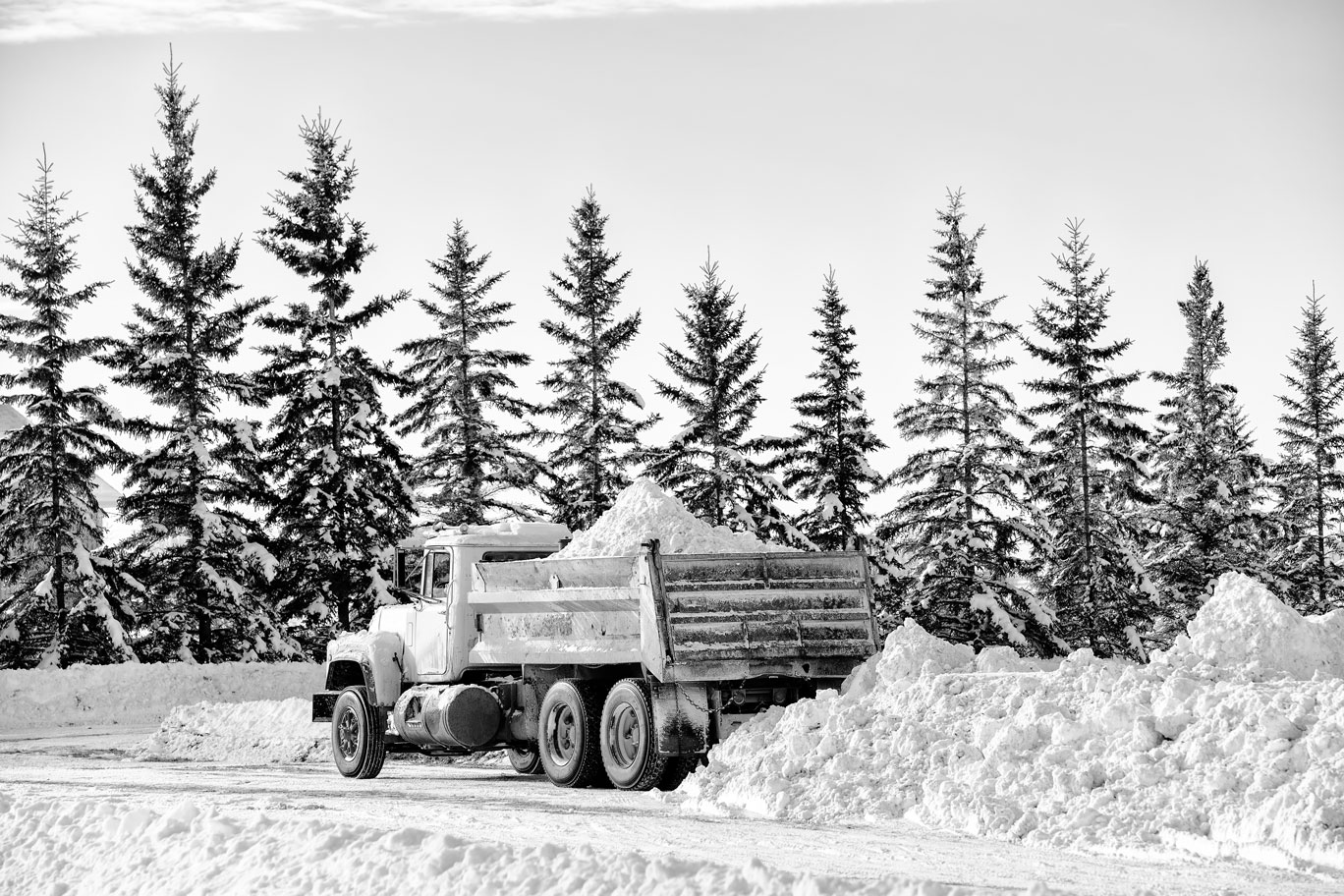
The dump truck exponentially increased what was possible in building and demolition, saving time by moving large quantities of just about anything from point A to point B. Seeing a back-breaking manual process that needed to be addressed, Saint John’s Robert Mawhinney put his revolutionary dumping design to the test in 1920, fashioning a truck with a first-of-its-kind dump box on its chassis. The box incorporated a cable and winch set-up and a mast. The movement of the box was controllable using a crank, and once set to a higher angle, gravity did the rest.
Mawhinney’s concept is perhaps the most impressive and universally adopted patent on this list, appearing all over the world in just a few short years. Almost a century later, a Prince Edward Island company developed a more modern way to get a load out of a dump truck trailer, inventing a live bottom conveyor trailer that can be backed in anywhere, thus eliminating the need for a backhoe to pick up the dumped load and transport it. The idea has since been attached to truck designs all over the world.
As Proud Atlantic Canadians we want to say “Welcome Home” to all new arrivals.
— KENT, Your Atlantic Canadian Home Improvement Store




December 1, 2021 @ 1:43 pm
Kerosene made gas lights safe among other things; huge invention: https://en.wikipedia.org/wiki/Kerosene