Getting To The Good Place
Mark Leger is the editor and part-owner of Huddle. This is a weekly column that features opinion, analysis and reflections on Huddle stories, podcasts and business news in the region.
I’m watching a Netflix series called The Good Place. The show revolves around four people trying to get into the “Good Place” in the afterlife, rather than the “Bad Place.” In the third season (yes, spoiler alert) they discover that no one has gotten into the “good place” in more than 500 years because the bar is set too high for the complexities of human existence.
Someone might have been a loving friend and family member, an active community volunteer and had a meaningful job, but they drove an SUV, burned oil in their furnace and bought clothes made from companies that used child labour. So off to the bad place they go, along with everyone else who knowingly (or unknowingly) made too many mistakes throughout their lives.
The tricky moral terrain explored on this show has been on my mind in recent months with the many podcasts and stories Huddle has done on sustainability and the green economy. Our individual and collective responsibility to reduce greenhouse gas emissions is one of the defining issues of our time, so I’m intrigued by the people and companies in our region doing things to tackle global warming and improve the general state of the environment.
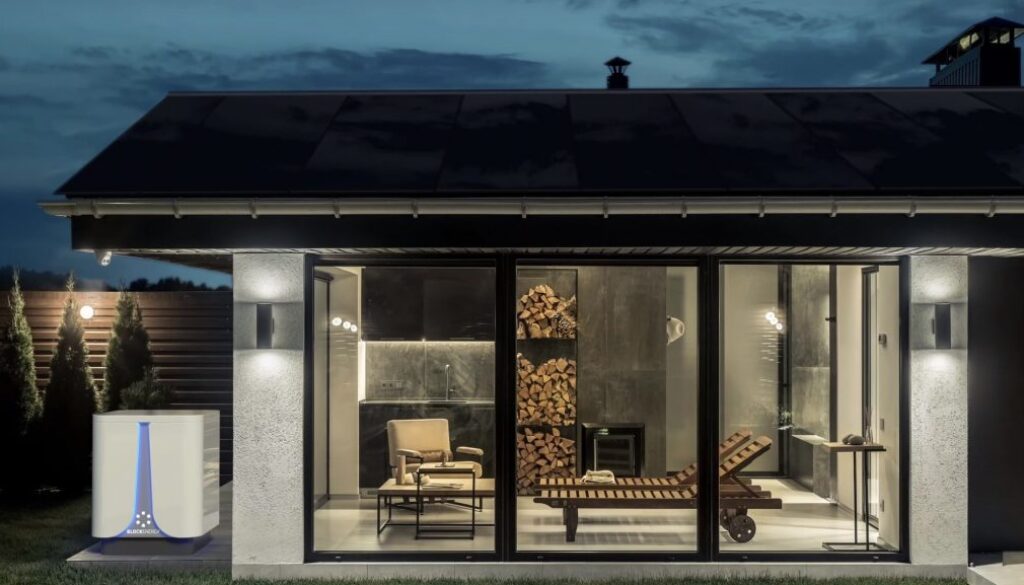
One of those people is Carl Duivenvoorden and his ambitious efforts to reduce emissions in his own life. Huddle has published his interesting and educational blogs on what people need to consider when buying electric vehicles. He was a guest on a “Home Office” podcast after he took another step toward a fossil-fuel-free life when he installed a solar power system to power his house and charge his car.
“Doing something is the best way to learn more about it and perhaps the best way to inspire others by your example,” says Carl, a writer, speaker and sustainability consultant from Kingsclear, New Brunswick. “In Canada, the biggest carbon footprint [for] the typical person would come from transportation and from the use of electricity in their homes. If you imagine our carbon emissions as a pie chart those are the two biggest slices of the pie.”
Podcast: Carl Duivendvoorden On Why The Price Is Right For Electric Vehicles And Solar-Powered Homes
Carl, who writes a newsletter with tips on living a more sustainable life, sets a great example for what people can do in their everyday lives to improve the natural environment. But many of the actions that send everyone to the “bad place” are the result of structural problems in our society and economy that are unseen or beyond their control.
We also need companies and governments to solve problems that make it easier for us to do the right things. For example, around the time I did the podcast interview with Carl, Huddle published a story on plans for a new solar-powered neighbourhood in Moncton. This week, we published a story on Emera Technologies and Novonix, Nova Scotia companies that are designing a “microgrid” platform for communities that would be powered by renewable energy that is stored using battery technology.
These kinds of innovations could eventually make it possible for larger numbers of people to live more sustainably.
On this week’s “Home Office” podcast, I spoke with a co-founder of a company that’s a great example of tackling a problem largely unnoticed by the average person, but one that would affect their ability to get into the “good place.”
TJ Galiardi is a former NHL player who founded Outcast in Dartmouth along with Dr. Darren Burke, who used to sell supplements to Galiardi during his playing days. They became friends and decided to start a business together after Galiardi retired from hockey in 2017.
Outcast takes discarded produce from nearby farms and Sobeys grocery stores and turns it into dried whole food powder used in protein supplement products and sold as ingredients for use in food and cosmetic products.
He and Burke have landed a large supplier in Sobeys, which is also a major retail partner along with Sportchek. They have also secured a high-profile investor in Arlene Dickinson from Dragons’ Den. Through her firm, District Ventures Capital, she invested $5-million. BDC Capital did the same, bringing the total to $10-million. With this investment, they’re expanding their operations in Dartmouth and plan to build a plant in Ontario.
Galiardi is a vegan committed to reducing food waste through Outcast, putting his personal commitment to living in a healthy and sustainable way to practice in his business. He helps Sobeys achieve its sustainability goals and makes a consumer’s decision to shop there more ethical because the chain is committed to reducing food waste.
It’s encouraging to see the entrepreneurs in these small and large businesses creating processes, products and services focused on sustainability. Political leadership is important too because they can set legislative and funding priorities that align with a greener economy.
For this reason, I’m intrigued by the new Nova Scotia premier Iain Rankin. He campaigned for the Liberal leadership on a sustainability platform and has made reducing greenhouse gas emissions and developing the green economy key priorities of his new government.
“We’re at a point now where renewable energy is the lowest cost option,” he told Huddle reporter Derek Montague in a recent interview. “The job opportunities are positive. We need to take action on climate change, and now it’s becoming very clear that it’s in the best interests of our economy.”
I realize he’s new to the job and there will be inevitable compromises in a region still reliant on fossil fuels, but gains like the ones being made by many of the region’s companies will help get us on the right course.
We’ll get to the “good place” yet.