How Much Support Will The Next Premier Give To Tourism And Hospitality Businesses?
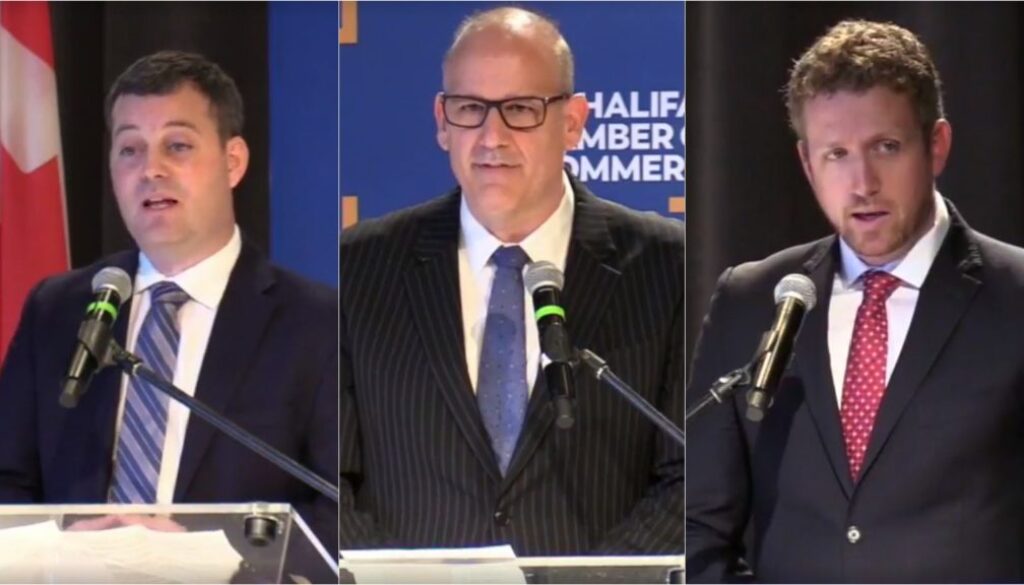
On February 6, The Nova Scotia Liberal Party will elect a new leader to replace outgoing premier Stephen McNeil. Last week, the three men vying to be the province’s next premier each laid out their vision at a series of question-and-answer session hosted by the Halifax Chamber of Commerce. This week, Huddle is digging into those sessions and exploring where Labi Kousoulis, Randy Delorey, and Iain Rankin stand on some of the most pressing issues in the province. Today we look at how they will help the struggling tourism and hospitality industry.
HALIFAX — The Covid-19 pandemic has arguably hit the tourism and hospitality sector harder than any other.
Liberal leadership candidates Labi Kousoulis, Randy Delorey, and Iain Rankin all recognize that and have promised various measures to help the sector.
All have promised to focus on marketing Nova Scotia as a tourist destination to the rest of Canada and the world.
They’ve also all promised some form of financial help to tourism and hospitality businesses. However, their visions for the nature of that help vary from blanket tax forgiveness to hesitancy to commit to any financial relief at all.
Tax Relief
Delorey’s most notable platform promise for the tourism and hospitality industry is a “tax holiday” for hospitality and foodservice businesses. That would mean completely waiving 2021 income taxes for small businesses in that sector.
Delorey has also promised to defer loan and tax payments for “businesses most impacted” by the pandemic until after the provincial state of emergency is lifted. And he will create small business cash flow loans for “heavily impacted sectors” of the economy.
During his interview with Sullivan, Delorey said he recognizes the past year has been particularly difficult for the hospitality sector and that these measures will help businesses maintain cash flow.
“We’re anticipating still some slower than usual seasons we’ve had in the past. So we want to help support and encourage continued operations so that those service providers in the hospitality and food services sector are there not just to serve Nova Scotians and Atlantic Canadians, but also are there when we welcome Canada and the world back to our beautiful province,” Delorey said.
Kousoulis is also promising some tax relief, although his measures don’t go quite as far as a blanket pass on paying provincial income taxes.
First, he promises to extend a program already in place that gives qualified tourism-industry businesses a 25 percent break on their property taxes. He said he would extend that program for at least a year, possibly longer.
And although not limited exclusively to tourism and hospitality businesses, he has also promised to invest $60-million “to the reduce property tax burden” for the province’s small businesses.
As he explained to Sullivan, “this is for our small businesses across the province. It’s not for major industrial manufacturers and it’s not for shopping malls or multinationals. It’s for Nova Scotia-owned small businesses.”
Rankin, meanwhile, took a more cautious stance on giving relief to businesses.
“I think we need to make sure that when we’re giving tax relief or other programs to businesses that it is the most effective use of public funds,” he said. “That’s why I didn’t come up with any specific arbitrary amounts without knowing where we’re going to be in February and seeing the analysis of how impactful relief programs have been [and] how they complement the federal programs.”
Tourism Marketing
All three candidates said they recognized the importance of attracting tourists back to Nova Scotia, specifically through marketing initiatives.
In his platform, Kousoulis promises to create a new marketing fund that will create “innovative ways of marketing the province” through the provincial tourism association. He says the fund will include a new program targeting Nova Scotia “staycations,” something tourism Nova Scotia is already doing.
Delorey also touched on the importance of tourism infrastructure. He said it will be vital to support the airline industry to create opportunities for people to once again travel to Nova Scotia.
“I think there’s a lot of work there and getting the message out and is an important part of rebuilding the industry. But also, too, are those structural pieces,” he said. “Doing marketing without having the infrastructure to bring people to the province isn’t sufficient. We have to actually invest in multiple approaches.”
Rankin, meanwhile, told Sullivan the sector “will need significant investment to rebound back strongly.”
“We’re going to need a marketing campaign that’s aggressive because it will be competitive with other regions that are facing the same [challenges],” he said. “We should have the confidence Nova Scotia is better than any other place in the country.”
He also talked about marketing as a way to draw people to the province on a more long-term basis. With all of its natural beauty and advantages, Nova Scotia is becoming an increasingly in-demand place to move to.
“So let’s be proud of the product we have and capitalize on it,” Rankin said.
Kousoulis also said he wants to see Nova Scotia market itself as a place for people to move to for work.
“There is a great opportunity for Nova Scotia in people who will come here and work. We know that a large proportion of the workforce … do not have to physically be in their area to perform their work. We are the safest place in North America that you could be living right now,” he said. “It could be a game-changer for us.”
It all comes back to the pandemic
During his chat with Sullivan, Delorey also argued the most important thing he can do to help the tourism and hospitality industries is quashed Covid-19. That will be his first priority.
“The absolute first thing is our Covid response, [I] absolutely cannot underscore that enough. If we don’t tackle Covid, if we don’t continue to keep our numbers low, if we don’t get our vaccine rollout right, we’re going to extend the recovery process,” he said.
Delorey said that will mean getting as many Nova Scotians vaccinated as quickly as possible and doing much more to tackle “vaccine hesitancy” among Nova Scotians.
This is the second in a series.