Be Patient And Supportive Of Local Businesses, Says This Halifax Entrepreneur
HALIFAX — The second wave of Covid-19 in Nova Scotia triggered a flurry of public health restrictions in Halifax. New rules governing closures and capacity limits were added to restrictions already in place around mask-wearing, social distancing, and sanitization.
There are few places where the restrictions are felt more than at a business grocery shopping, buying Christmas presents, or eating out. In fact, businesses have been on the front lines of Covid-19 enforcement since the pandemic began, asked to police gathering sizes, mask-wearing, handwashing, and more.
For many — especially smaller, local businesses — upholding public health rules can be stressful and challenging, especially while juggling the daunting task of surviving a customer-starved pandemic economy.
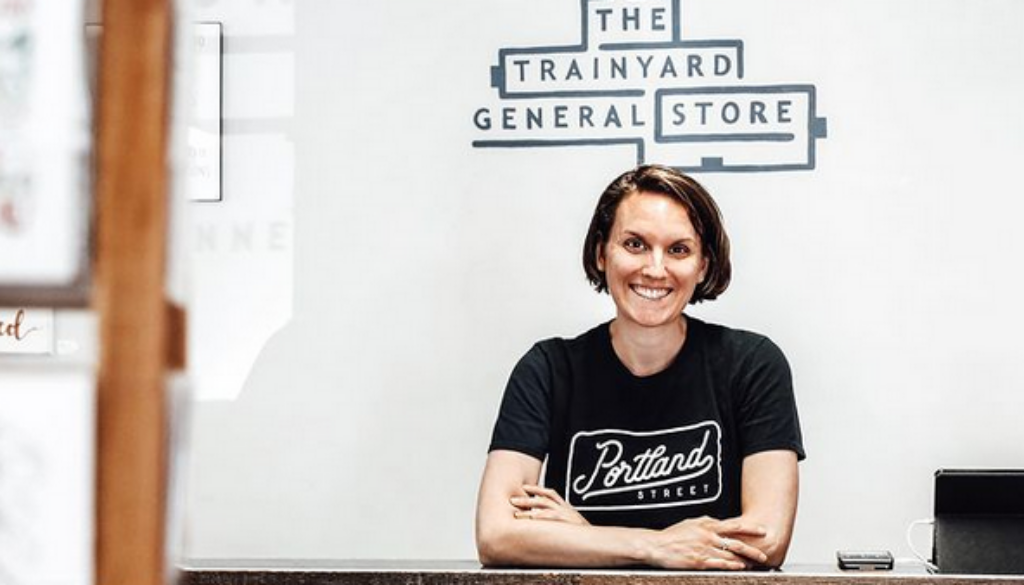
Kimberley Dares co-owns the Trainyard General Store in Dartmouth.
When the second wave of Covid-19 began late in November, Dares decided to close the store and move to by-appointment and online shopping only, which meant a dramatic drop in traffic.
No retailer wants to hamper sales just as holiday shopping starts to ramp up, but Dares says “it just ultimately felt like the socially responsible thing for us to do.”
“Like, if you come into the Trainyard and the other person in there with you isn’t wearing your mask correctly that’s on me,” she says.
Jim Cormier heads up the Canadian Retailers Association’s Atlantic office.
He says there’s no question the latest round of Covid-19 restrictions created a multitude of new responsibilities for businesses and that those responsibilities can become “overwhelming.”
“Whenever there’s increased responsibility put on retailers it can create some additional challenges,” he says.
First, businesses are expected to police social distancing, mask-wearing, and gathering limits inside their stores (at the same time more people are out shopping for the holidays). Then, they must manage all the new ways they’re expected to actually run their businesses during a pandemic.
All this not only creates incredible stress, but it also costs a lot more money.
“It’s just, it’s a very stressful time of year for retailers,” Cormier says.
To uphold the latest round of public health restrictions, Dares said she recently had to investigate hiring someone to monitor the door and ask people not to enter the business.
“Like, there’s never been a moment prior to this where I’ve thought, you know we probably need someone at the door bouncing, actively keeping people from shopping here. So that’s a really difficult thing to wrap your head around,” she says.
Hiring someone would take the pressure off her staff already struggling with new duties like packing and shipping heaps of online orders. But closing down has cut into revenue and she can’t foot the bill for another body.
Meanwhile, Dares (like many business owners) has had to figure out and implement on-the-fly a massive new e-commerce strategy, while navigating a labyrinth of government assistance programs.
Dare has two kids, so she’s also doing all this while “simultaneously fighting the desire to just lock us all in our house and never go outside.”
“So I think that’s a long-winded way of saying it definitely does ring true that small businesses are bearing the real significant burden in this,” Dares says.
Dares says she has seen tremendous support for local businesses throughout the pandemic but she doesn’t think people always realize how much businesses are being asked to do.
“I think small businesses are always is in these positions of being community leaders. And that is evident more so now than ever, where we have to make these kinds of choices,” she says. “It is the small businesses who are making big sacrifices to keep everyone safe.”
The good news, Cormier says, is that the public by and large have been cooperative and understanding when it comes to following public health rules in businesses.
There are always cases of bad people making things more difficult for retailers, he says, but rule flouting doesn’t appear to be widespread.
“If you were to randomly meet up with 100 people, they’re not all going to be good people. Luckily, the vast majority of people are ready willing and able to follow the rules because they understand that it’s about more than them,” he says.
Cormier says retailers will always do their best to enforce public health restrictions but that they can only do so much.
“There still has to be individual accountability, as well,” he says.
Dares also asks that people be patient with small businesses as they figure out how to operate in a dramatically different business environment.
“I’d encourage people to be really mindful that it’s basically like everyone’s first year of business all over again, so the learning curve is steep, the access to resources is limited, everyone is facing delays and staffing shortages, and trying to navigate new technology and all of these things,” she says.
“We want desperately to give you the same level of customer service that we always have, but also the deck is definitely stacked against us a little bit this year. So just to be patient and kind when you’re dealing with small businesses this year, because we are really doing our best just to get through the day.”