Women For 50% Want N.B. Leaders To Address ‘She-cession’ In Recovery Plans
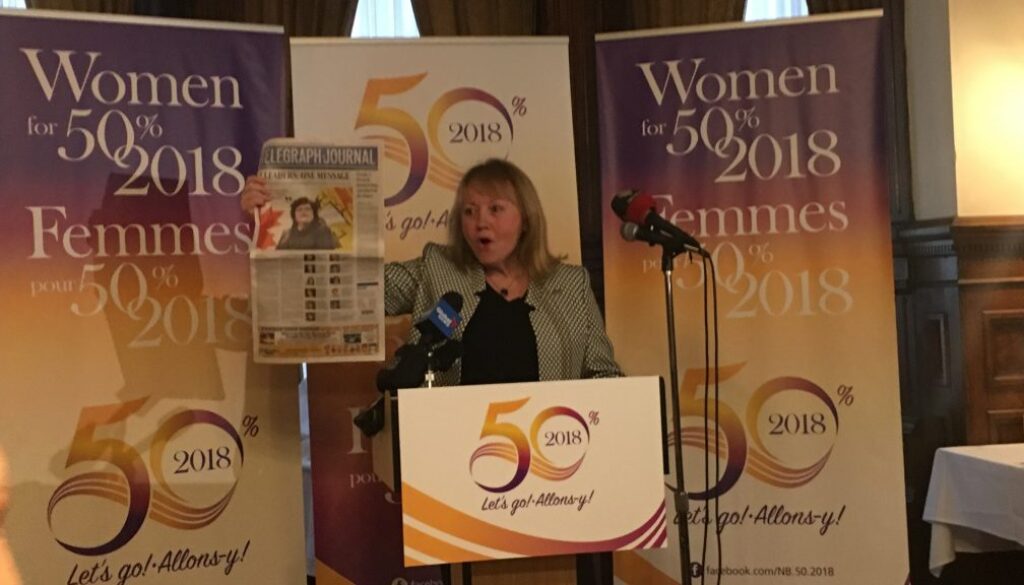
SAINT JOHN – The province’s Women for 50% group has issued a call for New Brunswick’s political parties to ensure 50 percent female representation of candidates in the September 14 provincial election.
In a letter to the provincial party leaders, the group also states that the economic crisis spurred by the Covid-19 pandemic has been coined as a ‘She-cession,’ reflecting how women have been most negatively impacted by the recession along with marginalized groups such as the LGBTQ+ and BIPOC communities.
“We’re calling on the political parties as they’re going forward in the election to demonstrate and to articulate in their platforms their Covid recovery plan vis-a-vie this recession that’s impacting women, and having women lead, help them lead the charge in defining what their plans are and going forward tracking and measuring the results,” said co-chair Roxanne Fairweather in an interview with Huddle.
Fairweather says several recent reports, including from the Royal Bank of Canada, say women are impacted 40 percent harder than males because of the pandemic-induced recession.
“This is really a huge impact financially on our GDP not only in New Brunswick but across Canada,” she said.
The RBC report also estimates the employment gains made by women since the 1980s have been nearly wiped out by the pandemic largely due to the lack of childcare, which the pandemic has revealed to be an economic issue.
The Organisation for Economic Co-Operation and Development (OECD)’s benchmark for childcare spending in developed countries is 1 percent of the GDP, but the province currently only spends 0.4 percent ($125-million) of its GDP on childcare.
The childcare gap is an issue faced by Women for 50% and in women’s groups across the province.
“It’s incredibly important that we have women’s voices in the legislature,” said Fairweather. “We know based on scientific, data analysis and research that If you’re not at a third of the presence in a group, your voice is not heard.”
In New Brunswick, women make up only 22 percent of the legislature. Eleven women were elected in the 2018 provincial election, up 30 percent from the 2014 election.
“When you do have gender parity in decision-making forums, the decisions that are made are better and the performance is better,” she said.
Discussions with the political parties have been positive thus far and on Friday all parties’ candidates will have their numbers in by midnight, Friday.
“I think relative to the shortness of time I think we’re making pretty good progress here,” she said. “As long as we do get the momentum and the commitment from the parties that they are pushing hard on getting more females to run.”