Vaccine Passports Are Not A Big Deal
The Saturday Huddle is a weekly column that features opinion, analysis and reflections on Huddle stories, podcasts and business news in the region.
Halifax Staff Writer Trevor Nichols shares his thoughts this week with Mark Leger on vacation, running on rural trails and roads, and driving his son to baseball games and practices. It’s published first as a Saturday morning newsletter – sign up and receive our free daily newsletter too.
Across Canada and around the world, “vaccine passports” are picking up steam.
Some countries have already created official documents that confirm a person’s vaccine status. This week in Nova Scotia, Liberal leader Iain Rankin promised to pursue the idea if he’s elected.
Talk of a new, government-sanctioned method of tracking people has stoked some legitimate concerns. It’s also prompted some very intense, very over-the-top outrage.
While I firmly believe we should pick every single government policy to pieces, I can’t understand the white-hot rage I see from the most intense vaccine passport skeptics.
Because, based on what I see, vaccine passports are not a big deal.
In the past, Canada has had far more restrictive vaccine mandates. In fact, harsher measures are in place in right now, right here in Atlantic Canada.
In New Brunswick, children must have proof of diphtheria, tetanus, polio, measles, mumps, and rubella immunization to attend school.
Parents can get an exception for medical or religious reasons. But if there’s an outbreak, unvaccinated children can be barred from coming to school.
In the early 20th century, Toronto was even vaccinating school kids without their parents’ permission to curb the spread of the smallpox pandemic. That policy helped contain what could have been a much bigger and more deadly outbreak in the city.
We’ve vaccinated kids against their parents’ will, we can force them out of school if they’re not vaccinated—so why are we worried about having to flash a card when we go to Denny’s?
This week, I spoke with Dr. Shawn Harmon about the ethical questions surrounding vaccine passports. Harmon is a research associate with the IWK Health Centre and part-time faculty at Dalhousie’s School of Law.
He outlined a whole bunch of very real concerns around creating vaccine passports.
A badly designed program would infringe on our Charter rights to “life, liberty, and security of person”, “equal protection and equal benefit of the law”, our right to move freely within the country—as well as a whole host of privacy rights.
Whoever designs our vaccine passports will have to think about how they discriminate against populations that have a harder time accessing vaccines. They’ll have to think about whether the data they collect violate people’s privacy. They’ll have to consider what it means if private-but-essential businesses bar unvaccinated people from entering.
And here’s the thing: they will.
I don’t have a ton of faith in our elected leaders. But I absolutely trust the very smart and dedicated public servants who will design the vaccine passport system politicians will take credit for.
In Nova Scotia, Dr. Strang showed us he and his public health team will act cautiously and in good faith as they implement public policy.
They haven’t done everything right, they’ve even made a few very bad decisions, but it seems clear they want to do right by the people of the province.
Think about the fact that Nova Scotia has never forced anyone to get a vaccine.
We know vaccines work. Getting to herd immunity faster means saving more lives, preventing more pain, saving more jobs, never attending another Zoom meeting EVER AGAIN.
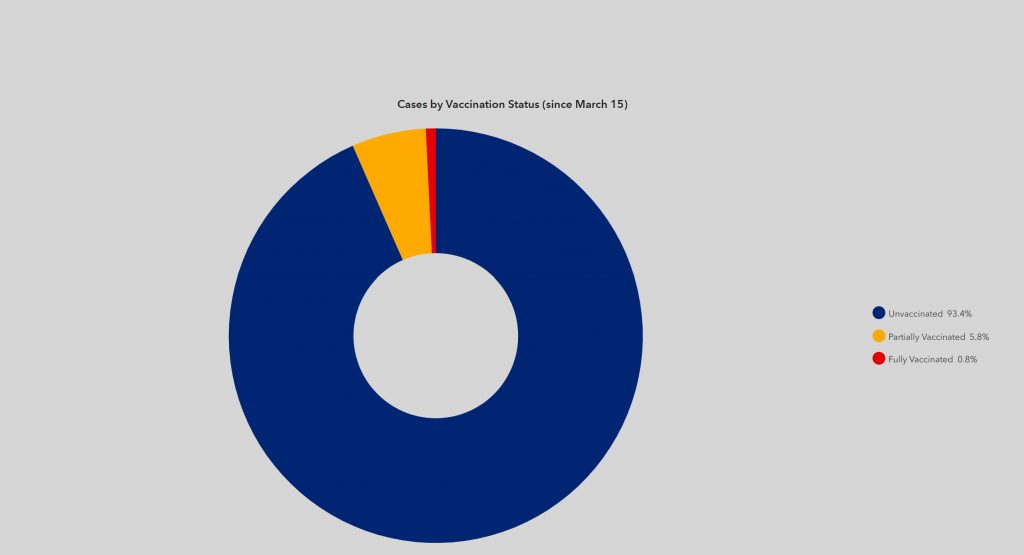
Image: Province of Nova Scotia
Considering all that, you could argue we have a moral obligation to do everything we can to get everyone vaccinated as fast as possible.
Harmon said there’s nothing inherently wrong with mandating vaccines for the entire population. The fact that high-risk professions like healthcare workers and teachers can still opt out speaks to our province’s desire to give people a choice.
Why wouldn’t officials take the same kind of approach when they design a vaccine passport?
We have lived through, and are right now living with, much stricter vaccine rules in Atlantic Canada. Those strict rules have worked, and no one’s storming the gates to get them changed.
It’s time to lighten up about vaccine passports that will be far less restrictive.
Our government is flawed but it will take a vaccine passport program seriously. Even if (or more likely when) it gets something wrong, I’m confident officials will have designed the policy with care and tried to make it as fair as possible.
Hell, you’ll probably still be able to go to Denny’s, even without one.